
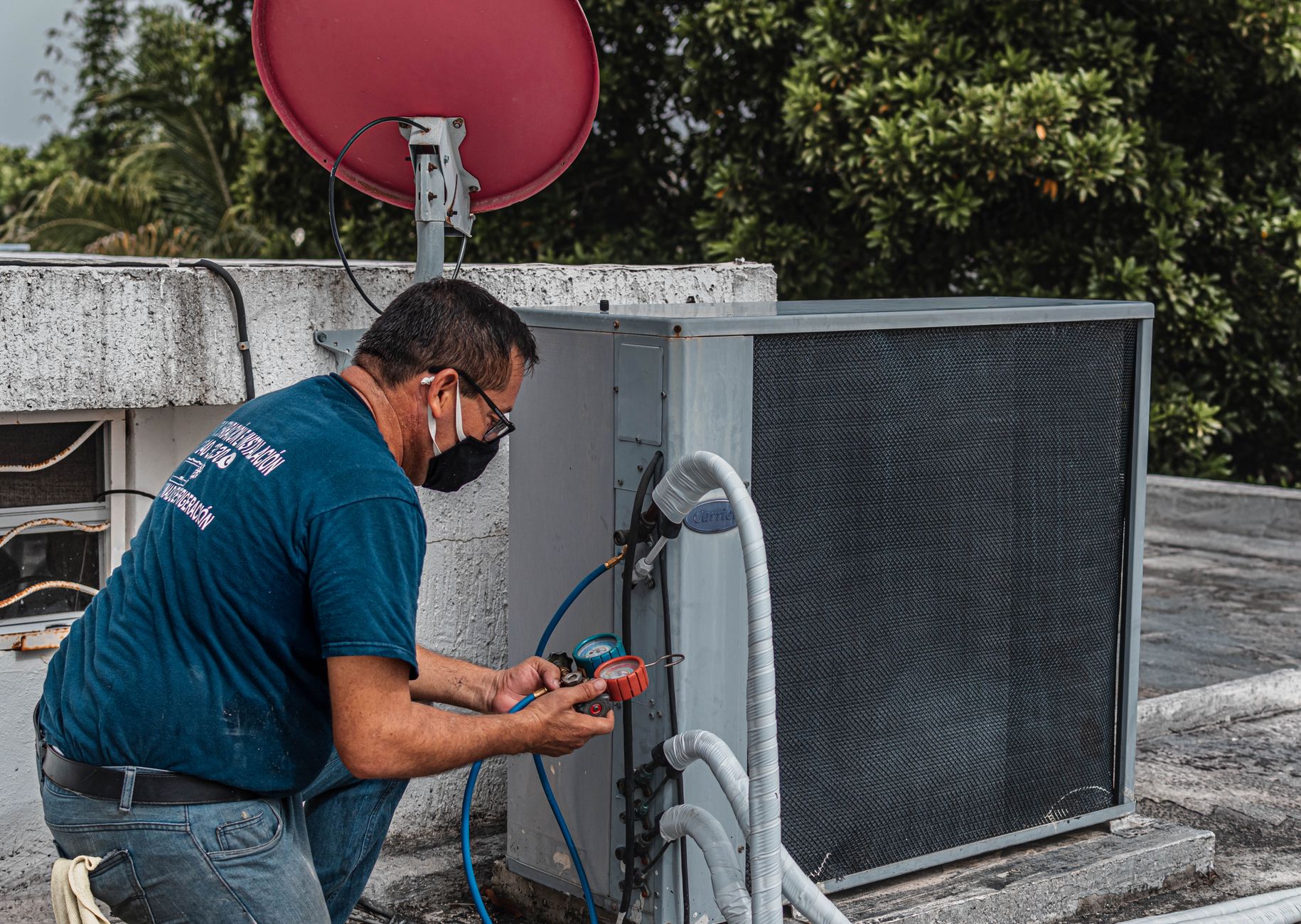
Emergency AC repair in Dubai is needed when your air conditioning system stops cooling entirely, makes abnormal sounds, or trips a circuit breaker during summer — any failure that cannot wait until a standard working-day appointment. In a Dubai summer, that is not excessive caution: internal apartment temperatures can exceed 38°C within 45 minutes of AC failure. This guide covers every common fault, the steps to take before the technician arrives, and the price benchmarks to expect from any reputable contractor.
Friday Evening, August. The Compressor Stops.
It is 8pm on a Friday in August. The outdoor unit goes quiet mid-evening. You notice the air feels thick, then warm, then genuinely hot. You check the thermostat — 19°C set temperature, but the room reads 29°C and climbing. The children are unsettled. You start calling numbers. Half don't answer. One answers and quotes AED 2,500 before they've heard a word about the fault.
This is the scenario Dubai residents face every summer, and the chaos of it is almost entirely avoidable. Knowing the likely cause, the reasonable cost, and the signs of a contractor who will take advantage of you at midnight are worth understanding before the crisis happens.
Why Dubai AC Systems Fail — and When They Fail
Most AC failures are not random. They follow predictable patterns tied to usage intensity and maintenance history. Dubai systems run an average of 3,200–3,800 hours per year — more than double the usage of a system in a temperate climate. That usage accumulates stress on specific components in specific ways:
- Late June to mid-August: Compressors and capacitors fail as outdoor temperatures peak above 44°C and systems struggle to reject heat through the condenser coil. This is peak emergency season across every Dubai community.
- After shamal wind events: Condenser coils and outdoor filters block suddenly with sand and dust, causing high-pressure safety lockouts within 12–24 hours
- Systems aged 5–8 years: Capacitor failure becomes statistically likely; refrigerant circuit faults develop at copper flare connections from repeated thermal expansion and contraction
- After long vacant periods: Properties empty for 2–3 months then reoccupied sometimes stress-fail a borderline component on first restart under full load
- Systems without annual service: Blocked filters and dirty coils force the compressor to work harder, shortening its life from 12–15 years to 6–8 years in Dubai's climate
Warning Signs Your AC Is About to Fail (7–14 Days Before It Does)
Most AC failures give at least one warning sign that most people notice but do not act on. Catching these early converts a AED 800–3,500 emergency visit into a AED 250–450 scheduled service call:
- Longer than usual cool-down period after switching on — the room takes 45 minutes to reach set temperature when it used to take 15
- Ice forming on the indoor unit coil or the refrigerant pipes running to the outdoor unit
- Warm air from the vents despite the thermostat being set to 19°C or below
- Clicking, rattling, or a grinding sound from the outdoor unit — particularly on startup
- A sudden unexplained increase in your DEWA electricity bill: a degraded system draws 20–35% more current to deliver the same cooling
- Water dripping from the indoor unit: this almost always indicates a blocked condensate drain, which will become a ceiling damage problem if not cleared
What to Do in the First 10 Minutes When Your AC Fails
- Confirm it is your unit, not the building. Ask a neighbour whether their AC is working. A building chiller failure or district cooling outage (Empower, Emicool, PAFCO) affects all units simultaneously — this goes to building management, not a maintenance contractor. If you are unsure which system you have, check your DEWA bill: district cooling appears as a separate line charge.
- Check the thermostat settings. An accidentally switched mode (FAN rather than COOL) or a high set temperature causes a meaningful number of unnecessary callouts every month. Confirm mode and set point before anything else.
- Check the circuit breaker. Find your DB board and check whether the AC MCB has tripped. Reset it once. If it trips again immediately, there is an active electrical fault — leave it off and call a technician.
- Inspect the outdoor unit. Is it running? Can you hear it or feel warm air exhausting from it? A running indoor unit with a completely silent outdoor unit points to a compressor, capacitor, or contactor fault in the outdoor section.
- Close all curtains and blinds. This reduces solar heat gain by 15–25% and slows the rate at which the space heats up while you wait for the technician.
- Stop cycling the system. Turning the unit on and off repeatedly during a fault is one of the most common ways a AED 300 capacitor repair becomes a AED 3,500 compressor replacement. Switch off at the breaker and leave it off.
The 6 Most Common Causes of Emergency AC Failure in Dubai
1. Capacitor Failure
The single most common cause of sudden AC failure in Dubai. Capacitors are cylindrical components inside the outdoor unit that deliver the starting and running charge to the compressor and fan motors. They degrade with heat over 5–8 years and typically fail suddenly rather than gradually. Symptom: the outdoor unit hums briefly when attempting to start, then cuts out. The compressor will not run. Repair: AED 180–400 all-in including the part, completed in under an hour in most cases. This is the fault where carrying the right part on the service vehicle makes the difference between a one-hour fix and a two-visit job.
2. Refrigerant Leak
A refrigerant leak causes gradual performance loss over days or weeks — the system runs continuously but produces progressively warmer air as the charge drops, until it triggers a low-pressure safety lockout and stops entirely. In Dubai, leaks most commonly develop at the flare connections between the indoor and outdoor unit, where thermal cycling over years loosens the fittings. Repair involves leak detection, pressure testing, fixing the leak point, and recharging the system: AED 500–1,000 depending on system size and refrigerant type (R410A is now standard; older R22 systems are being phased out and R22 is increasingly scarce and expensive). Note: topping up refrigerant without fixing the leak is a short-term measure. A responsible technician finds and repairs the leak before recharging.
3. Blocked Condenser Coil
Dubai's desert sand and construction dust block outdoor condenser coils faster than almost any other climate. A fully blocked condenser cannot reject heat from the refrigerant circuit efficiently, causing the system to overheat and trip on high-pressure protection. Left too long, this causes compressor overheating and permanent damage. Symptom: the system runs but cooling output is poor; the outdoor unit feels extremely hot to the touch and the air exhausting from it is not significantly warmer than ambient. Remedy: pressure-wash and chemical clean of the condenser coil, AED 200–400. If the coil is physically damaged or the fins are crushed, replacement costs significantly more.
4. Frozen Evaporator Coil
A frozen indoor coil produces warm or no air, which is counterintuitive. It is caused by either a severely blocked air filter (most common) or very low refrigerant levels that drop the coil below 0°C, forming an ice block around it. You will see water dripping from the indoor unit as the ice melts when the system stops, and you may see frost on the refrigerant pipes. First response: switch to FAN ONLY mode for 2–4 hours to defrost, then clean or replace the air filter. If the coil freezes again immediately after restart, low refrigerant is the underlying cause — a technician is required.
5. Compressor Failure
The most expensive AC fault and the outcome most often caused by deferred maintenance. Compressor replacement typically costs AED 1,800–4,000 depending on system capacity and brand, with labour on top for larger systems. Compressor failure is most common in systems over 8 years old that have run without regular servicing in Dubai's heat. On a system that is 10 years or older, a failed compressor is usually the trigger to replace the entire outdoor unit rather than the compressor alone — the rest of the system is similarly aged, and a new inverter unit will be 30–50% more energy-efficient, reducing DEWA costs meaningfully over 3–5 years.
6. Control Board or Thermostat Fault
Electronic control boards can fail from power surges (common in older Dubai buildings with unstable supply), moisture intrusion in utility rooms, or gradual component degradation. Symptoms include error codes on the display, the system switching on and off randomly, the remote control having no effect, or specific functions (cooling but not heating on a heat pump, for example) ceasing to work. Control board replacement: AED 400–900 depending on model. For older or discontinued models, sourcing the correct board can take 2–5 working days.
Emergency vs. Same-Day AC Repair: Which Service Do You Need
Emergency response — dispatched immediately at any hour, at premium labour rates — is justified when:
- It is peak summer (June through September) and there is no functioning alternative cooling
- Vulnerable occupants are present: infants, elderly residents, anyone on heat-sensitive medication
- A commercial property has ongoing business operations that cannot pause
- The outdoor unit is making burning, grinding, or violent rattling sounds — indicating imminent mechanical failure
Same-day service — scheduled for the same working day at standard rates — is the right choice when:
- The fault is gradual reduced cooling rather than complete failure
- The call is in October through April when ambient temperatures are tolerable without AC
- A portable or window unit can manage the space in the interim
Emergency rates add AED 150–350 to the total visit cost. If you can safely wait 4–6 hours for a same-day appointment, it is almost always the correct financial decision.
How to Vet an Emergency AC Technician at Midnight
Emergency AC repair is one of the most frequently exploited services in Dubai. A low callout fee advertised online sometimes conceals inflated part prices, unnecessary replacements, or refrigerant charges for systems that do not have a leak. Protect yourself with these checks:
- Ask for a written diagnosis and quote before work starts. A professional will identify the fault, explain the cause clearly, and quote the repair before touching anything beyond a basic check. "I need to open it up first to know the price" is acceptable for diagnosis; providing no written figure before starting work is not.
- Question any immediate compressor replacement recommendation. Compressor failure is real but often misdiagnosed to justify a higher invoice. A failed capacitor and a failed compressor produce similar symptoms; the capacitor costs AED 180 and the compressor costs AED 2,000. Ask the technician to show you the faulty component before authorising replacement.
- Ask for a warranty in writing. Reputable contractors provide at least 30–90 days on labour and a manufacturer warranty on parts. A contractor who refuses to provide a warranty on their work is communicating something important.
- Be sceptical of an R22 refrigerant recharge on a system that runs R410A. This does happen — wrong refrigerant, wrong pressure, additional damage.
AC Emergency Repair Costs in Dubai: Honest Benchmarks
- Emergency callout fee: AED 200–350 (waived for AMC clients)
- Capacitor replacement: AED 180–400 total including part and labour
- Refrigerant recharge with leak test and repair: AED 500–1,000
- Condenser coil deep-clean (pressure wash and chemical treatment): AED 250–450
- Control board replacement: AED 500–900 depending on model availability
- Compressor replacement: AED 1,800–4,000 total for standard split-unit sizes
- Full outdoor unit replacement (1.5–2.5 ton split): AED 2,500–5,500 supply and install
Any technician quoting a fixed price before diagnosing the fault should be questioned. Diagnosis precedes pricing. Always.
Repair or Replace? The Honest Calculation
A useful rule of thumb: if the repair cost exceeds 50% of a comparable new unit's installed cost and the system is over 10 years old, replacement usually offers better long-term value. Current inverter AC units (Daikin, Mitsubishi, Carrier) consume 30–50% less electricity than non-inverter models from a decade ago. On a typical Dubai apartment running AC 10–12 months a year, that efficiency difference can save AED 150–400 per month on DEWA bills. Factor that saving into the repair-versus-replace calculation before authorising a AED 2,000 compressor replacement on a 12-year-old system.
Frequently Asked Questions
What qualifies as an AC emergency in Dubai?
A complete system failure during summer (June–September) when indoor temperatures will rise to unsafe levels, unusual burning or grinding sounds from the unit, water dripping from the indoor unit into a room (indicating a blocked condensate drain that risks ceiling damage), or any failure affecting vulnerable occupants — infants, elderly, or people on heat-sensitive medication. Reduced cooling in mild weather is urgent but not an emergency.
How quickly can I get emergency AC repair in Dubai?
Response times vary by location and time of day. Central zones (Downtown, Marina, Business Bay) are typically 25–45 minutes. Mid-ring communities (JVC, JLT, Barsha) are 40–60 minutes. Outer villa communities are 60–90 minutes. True Guard confirms your ETA at the time of call. During peak summer, demand is highest between 6pm and midnight — calling immediately gives you the best response time.
Is emergency AC repair more expensive than a scheduled service?
Yes. Emergency callout fees add AED 150–350 to the total visit cost compared to a standard appointment. Labour rates for out-of-hours work are also higher. If you can safely wait until the next morning for a same-day appointment — particularly in cooler months — the saving is meaningful. AMC clients have their emergency callout fee waived.
My building has district cooling — who do I call when it fails?
District cooling systems (Empower, Emicool, PAFCO) are the building owner's or building management's responsibility. Call your building management first; they contact the district cooling provider directly. You can confirm you have district cooling by checking your DEWA bill — it will show a separate district cooling charge rather than a high electricity consumption from a private AC unit.
Can I add refrigerant to my AC myself?
No. Refrigerant handling requires a licensed HVAC technician with specialised manifold gauges and recovery equipment. More importantly, a refrigerant shortage is always caused by a leak — adding refrigerant without finding and fixing the leak point means it will escape again within weeks. A responsible technician locates and repairs the leak before recharging.
My AC is 10+ years old — is it worth repairing or should I replace it?
If the repair cost exceeds 50% of a comparable new unit's installed price and the system is over 10 years old, replacement typically offers better long-term value. Modern inverter systems are 30–50% more energy-efficient than non-inverter models from a decade ago. On a system running 10–12 months a year in Dubai, the DEWA saving alone can justify the replacement cost within 2–4 years.
How long does emergency AC repair take?
Most common faults — capacitor replacement, condenser coil cleaning, condensate drain clearance — are completed in 1–2 hours on the first visit. Refrigerant recharges take 2–3 hours including leak detection. Control board or compressor replacements may require a return visit if the part needs to be sourced, though True Guard service vehicles carry the most common parts to resolve the majority of faults on the first call.
Does AC repair come with a warranty?
True Guard provides a 90-day warranty on all labour and a manufacturer warranty on replaced parts — typically 12 months for compressors and major components, 6 months for capacitors and electronic parts. Get warranty terms in writing before authorising any repair. A contractor who declines to provide a warranty in writing is worth questioning.