
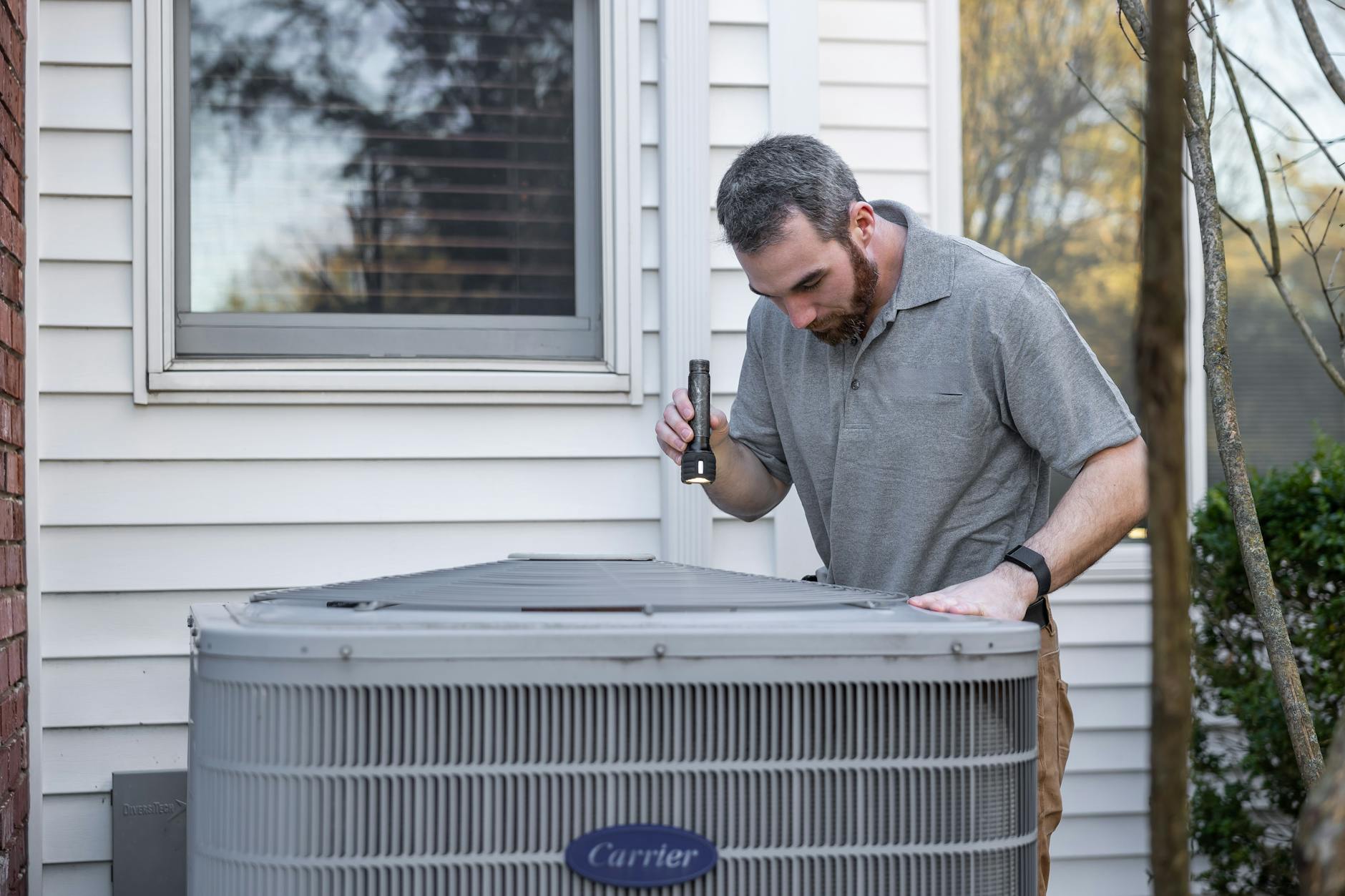
Emergency maintenance in Dubai is any fault that, left unattended for a few hours, will either cause active property damage, create a safety risk, or escalate into a repair that costs ten times more than acting now. A burst pipe, a failed AC during a 43°C summer night, an arcing DB board — these are not problems to queue for a weekday appointment. Knowing who to call and what to do before they arrive is the difference between a controlled repair and a six-figure insurance claim.
It Started on a Friday Evening
A pipe fitting behind the kitchen tiles in a JLT apartment gives way at 9pm. Nobody notices the trickle until the gypsum ceiling in the unit below starts to sag at 11pm. By the time a technician arrives, two ceilings need replacing, the downstairs tenant is displaced, and the landlord is facing a claim from both parties. The pipe fitting itself cost AED 35. The repair bill was AED 28,000.
That story is not unusual. Dubai's combination of high water pressure, ageing GI pipework, and sealed gypsum walls means small faults become serious ones faster than in most climates. Acting in the first hour is not an overreaction — it is the financially rational choice.
What Actually Qualifies as a Maintenance Emergency
Not every fault warrants a premium-rate midnight callout. A genuine maintenance emergency meets at least one of the following:
- Active property damage in progress: water flowing inside the building, a sagging or bulging ceiling, visible structural movement
- Safety threat: no AC during summer (outdoor temperatures above 38°C), a burning smell near the DB board, water pooling near live electrics, a gas odour
- Escalating cost: a fault that is measurably more expensive to fix in 6 hours than it is right now — a blocked condensate drain causing ceiling saturation is the most common example
- Business or rental interruption: a commercial kitchen, short-term rental, or multi-tenant property with systems offline
If none of these apply — a slow drip you can contain with a towel, a cracked tile, a stiff door handle — schedule same-day service at standard rates. You will save AED 200–350 in out-of-hours surcharges and get the exact same outcome.
The 7 Most Common Property Emergencies in Dubai
1. AC Failure During Summer
Dubai's indoor temperature can reach dangerous levels within 20–30 minutes of an AC failure in July or August. A sealed apartment facing south with no ventilation will hit 35°C internally before the sun sets. This is consistently the most common emergency call across all Dubai communities, peaking between mid-June and mid-September when compressors and capacitors run at continuous maximum load. Families with infants, elderly residents, or anyone on medication that requires cool storage should treat this as a priority-one emergency regardless of the time.
2. Burst Pipes and Active Water Leaks
Dubai's hard water accelerates internal corrosion in galvanised iron pipework — the standard material in buildings constructed before 2010. JLT, Discovery Gardens, International City, and parts of Dubai Marina are the most common affected areas. When a pinhole leak becomes a rupture, hundreds of litres can escape before the mains supply is isolated. The structural damage to gypsum, insulation, and flooring compounds rapidly after the first hour.
3. DB Board and Electrical Faults
Distribution board failures are the leading cause of complete electrical loss in Dubai apartments. Repeated MCB tripping, a burning smell near the panel, scorch marks on terminals, or a breaker that will not reset even with no load — these all require a licensed electrician, not a building security guard with a torch. DEWA will not restore supply to a property with a confirmed internal fault, and DEWA itself only handles faults on the network side of your meter. Everything from the meter inward is a private contractor's responsibility.
4. Blocked Drains and Sewage Backflow
Ground-floor and basement units in JVC, Arjan, Remraam, and parts of Al Barsha are vulnerable to main drain backflow during heavy rain events. In apartment buildings, a blocked shared soil stack puts every unit on that riser at risk of sewage overflow within hours. Commercial kitchens with a blocked grease trap escalate at the same speed. The downstream cost of sewage damage — contamination cleanup, flooring replacement, mould treatment — makes this one of the most expensive emergencies to delay.
5. Gypsum Ceiling Structural Failure
A water-saturated gypsum ceiling collapse is the most destructive — and most preventable — emergency we attend. The cause is almost always a blocked AC condensate drain, which is a 10-minute service task costing AED 80 in a routine visit. Left uncleared, the condensate backs up into the ceiling void, saturates the gypsum board, and eventually brings it down. Replacement costs AED 4,000–12,000 per room including labour and painting. A bulging or discoloured ceiling patch is a structural emergency: vacate the area and call immediately.
6. Water Heater Failure
Storage water heaters develop pressure relief valve faults that produce slow, concealed flooding inside utility rooms. When the anode rod has never been replaced and the tank shell corrodes through, the failure can be sudden and voluminous. For villas and short-term rentals where multiple households lose hot water simultaneously, same-day response is expected under Dubai tenancy obligations.
7. Access and Lock Failure
Being unable to secure a property overnight is a genuine safety concern, particularly in villa communities. Electronic smart lock failures — dead battery, firmware fault, credential corruption — are increasingly common as Dubai properties upgrade their security hardware. We treat after-hours access failures as emergencies and carry bypass tools for the most common smart lock systems in the market.
The First 15 Minutes: What You Do Before We Arrive
The actions you take before the technician gets there almost always determine the final bill. Here is what to do for each fault type.
Water emergencies
- Find the main isolation valve and close it. In apartments: inside the main bathroom behind a small access panel, or under the kitchen sink. In villas: at the boundary wall or in the plant room near the meter. This single action stops the damage from growing.
- Open the lowest ground-floor tap to drain residual pressure from the pipes above
- Move electronics, furniture, and soft furnishings out of the water's path before cleaning anything up
- Photograph all visible damage before moving anything — your insurer will require a photographic record before any repair or cleanup
Electrical emergencies
- Do not reset a tripping MCB more than once. If it trips again immediately with no load on the circuit, there is an active fault. Repeated resets can start a fire.
- Unplug all appliances from the affected circuit before attempting any reset
- If you see scorch marks or smell burning near the DB panel, leave the area immediately — do not touch anything — and call from outside the room
- Call DEWA (991) only if the fault is on the street-side network: downed cables, transformer issues, or a meter that is dead while your neighbours have power. Internal building faults require a licensed private electrician.
AC emergencies
- Ask a neighbour first. If their AC is also out, it is likely a building chiller or district cooling fault — call building management. If only your unit is affected, it is a private maintenance issue.
- Close all curtains and blinds immediately to reduce solar heat gain by 15–25%
- Move heat-sensitive items — medications, infants, pets — to the coolest available space
- Stop cycling the thermostat. Repeated on-off resets during a fault can convert a AED 350 capacitor replacement into a AED 3,500 compressor replacement. Switch off at the breaker and leave it off until the technician arrives.
How to Vet a Midnight Contractor: Red Flags That Cost You Money
At 2am in August, the instinct is to call whoever answers first. That instinct is understandable and routinely exploited. Unscrupulous operators quote low callout fees then dramatically inflate part prices once they are in your property. Here is how to protect yourself:
- Ask for a written quote before any work starts. A professional will diagnose the fault, explain the cause, and provide a written figure before touching anything beyond making the situation safe. "I'll tell you the cost when I see it" is not acceptable after diagnosis.
- Check for a trade licence number. DEWA-licensed electricians and Dubai Municipality-registered contractors carry verifiable licence numbers. Ask for it.
- Be suspicious of unusually low callout fees. A AED 50 callout almost always means inflated part and labour costs once access is gained.
- Get a written damage report. If you are a tenant, you will need this for your RERA maintenance dispute record. If you are a landlord, you will need it for the insurance claim.
Tenant vs. Landlord: Who Is Responsible in a Dubai Emergency
Under Dubai's tenancy law (Law No. 26 of 2007 and its amendments), the landlord is responsible for maintaining the property in a condition fit for its intended use. In practice:
- Structural and mechanical systems (pipes, DB boards, AC units, water heaters) are the landlord's responsibility
- Damage caused by tenant misuse — a blocked drain from cooking grease, a cracked tile from a dropped item — is the tenant's liability
- In an emergency where delay causes further damage, a tenant is legally entitled to arrange the repair and recover the reasonable cost from the landlord, provided they notify the landlord promptly and document everything
True Guard provides a detailed written damage report for every emergency callout, which supports both RERA maintenance dispute submissions and insurance claims.
Emergency Response Times Across Dubai
Our teams are based across the city rather than dispatched from a single depot:
- Central zones (Business Bay, Downtown, DIFC, Marina, JBR, Palm Jumeirah): 25–45 minutes
- Mid-ring communities (JVC, JLT, Al Barsha, Mirdif, Deira, Bur Dubai): 40–60 minutes
- Outer communities (Arabian Ranches, Dubai Hills, DAMAC Hills, Dubai South, Mudon): 60–90 minutes
We confirm your ETA when you call. For gated villa communities with security registration requirements, have your unit number and the registered owner or tenant name ready — it can save 10–15 minutes at the gate.
Emergency Maintenance Costs in Dubai: Honest Benchmarks
- Emergency callout fee: AED 150–350 (waived for AMC clients)
- First-hour labour by trade: AED 200–500 depending on trade and time of callout
- Common emergency parts: AED 50–350 (isolation valves, MCBs, condensate drain components, capacitors)
- Typical all-in emergency visit: AED 450–900, with any permanent repair beyond the immediate stabilisation quoted separately
- Complex emergencies (ceiling collapse, pipe reroute, DB board replacement): AED 2,000–12,000 depending on scope
We provide a written quote before any work beyond making the fault safe. If a full repair requires specialist parts, a permit, or a return visit, we explain the options and timeline before proceeding.
Why AMC Clients Have Fewer Emergencies — and Pay Less When They Do
Preventive maintenance costs less than emergency repair. This is not a slogan — it is arithmetic. A quarterly AC service costs AED 200–350 and includes clearing the condensate drain, checking refrigerant pressure, and cleaning the filters. A ceiling collapse from a blocked condensate drain costs AED 4,000–12,000. The ratio is roughly 1:20.
True Guard AMC clients average significantly fewer emergency callouts per year compared to ad-hoc customers, because scheduled inspections catch developing faults while they are still inexpensive to fix. An AMC also includes priority emergency dispatch with no callout fee — for a villa owner who has one emergency per year, the contract typically pays for itself on that single visit alone.
Frequently Asked Questions
How quickly can True Guard respond to a maintenance emergency in Dubai?
We aim to dispatch within 15 minutes of your call. Arrival times are 25–45 minutes for central zones (Business Bay, Downtown, Marina), 40–60 minutes for mid-ring communities (JVC, JLT, Al Barsha), and 60–90 minutes for outer communities (Arabian Ranches, Dubai Hills, Dubai South). We confirm your ETA when you call.
What should I do first when a pipe bursts in my Dubai apartment?
Close the main isolation valve immediately — this stops the damage from growing. In apartments it is usually behind an access panel in the main bathroom or under the kitchen sink. Then open the lowest tap to drain residual pressure. Photograph all damage before moving anything, and call emergency maintenance. Do not wait to see if it stops on its own.
Is DEWA responsible for faults inside my apartment?
No. DEWA is responsible for the network up to your meter — the cables, transformers, and water main to the building. Everything from your meter inward is either your responsibility or your building management's for shared systems. Call DEWA (991) for street-side network faults only. Internal faults require a licensed private contractor.
What if I am a tenant — is the landlord responsible for emergency repairs?
Under Dubai tenancy law, landlords are responsible for structural and mechanical systems (pipes, AC units, DB boards, water heaters). In an emergency where delay causes further damage, you are entitled to arrange the repair and recover the reasonable cost from the landlord, provided you notify them promptly and document everything. True Guard provides a written damage report that supports RERA dispute submissions.
Does Dubai property insurance cover emergency repair costs?
Most Dubai property insurance covers consequential damage — water damage to contents, a gypsum ceiling collapse caused by a burst pipe — rather than the repair itself. Some policies cover trace and access costs for finding a concealed leak. Photograph all damage before any cleanup and contact your insurer before authorising extensive repair work, as they may require their own assessment.
What is the difference between emergency and same-day service?
Emergency service is dispatched immediately, at any hour, at premium labour rates. Same-day service is scheduled for the same working day at standard rates. If the situation is urgent but stable — a contained drip, a tripping circuit with no burning smell, a fault in October rather than August — same-day service is almost always the right financial decision. The difference is typically AED 200–350 in callout surcharges.
How can I reduce the number of emergencies I have each year?
The three highest-impact preventive tasks in Dubai are: quarterly AC servicing (clears condensate drains and checks refrigerant — the single biggest source of emergency calls), an annual plumbing pressure test to catch hairline leaks before they become ruptures, and a bi-annual electrical inspection to identify degraded connections in the DB board. An Annual Maintenance Contract bundles all three with priority emergency dispatch.