
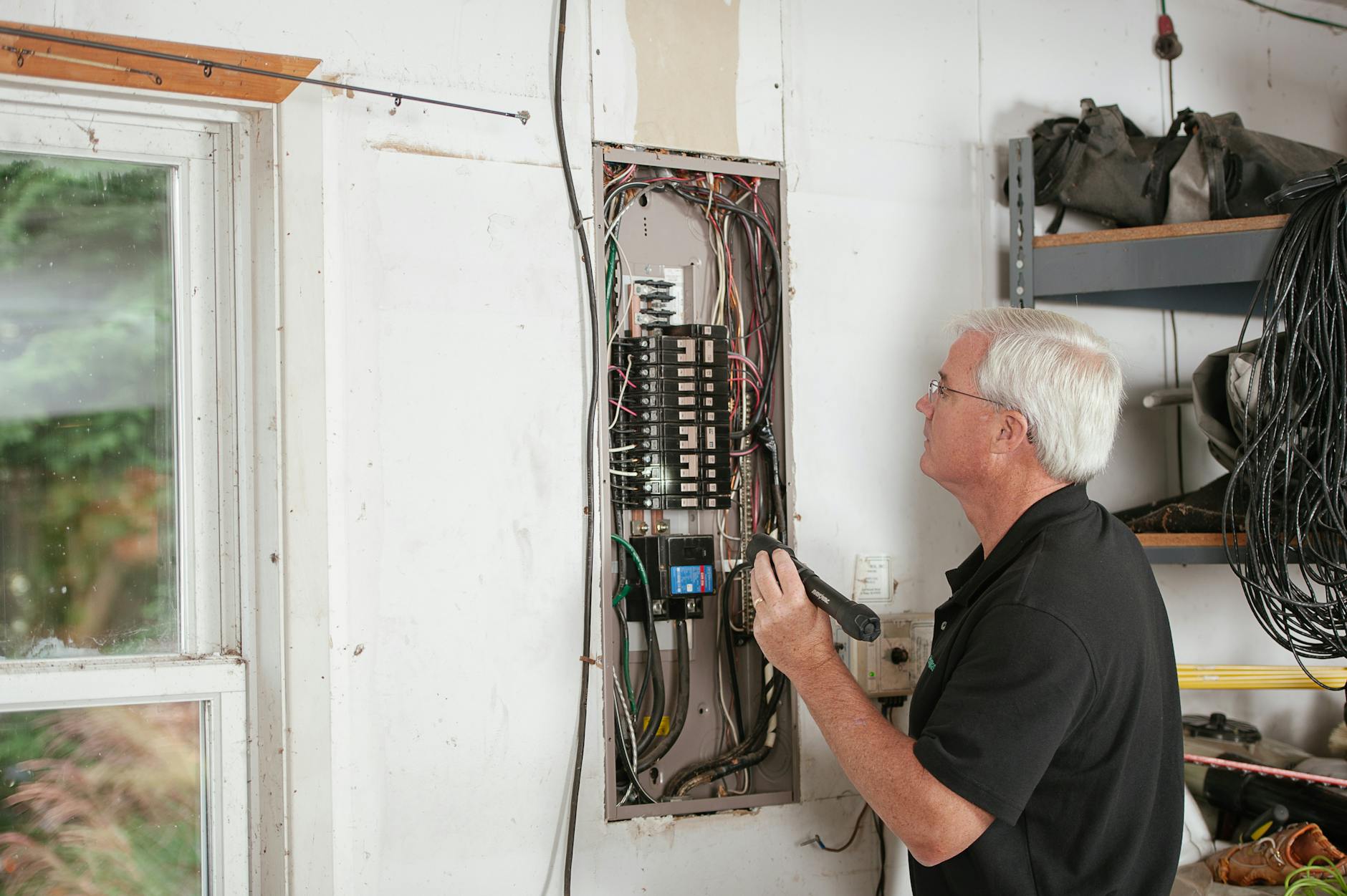
It is Saturday night and the lights in your apartment go out. Your neighbours still have power. You find the DB board, reset the main switch, and it trips again immediately. At this point, most people either try resetting every breaker in sequence or do nothing at all — both responses can make the situation worse. What follows is the sequence that protects your household and gives the arriving electrician the information needed to find and fix the fault fast.
Immediate Safety: What to Do Before the Electrician Arrives
Electricity is the only home maintenance emergency where uninformed intervention can cause serious injury. These steps are not optional:
- If you see sparks, smell burning plastic, or see scorch marks near sockets or the DB board — leave the area immediately. Do not attempt to investigate the source.
- Never use water on an electrical fire. Use a CO2 or dry-powder extinguisher if it is safe to do so, or evacuate and call Civil Defence on 997.
- Never touch a person receiving an electric shock. You will complete the circuit. Use a dry, non-conductive object — a wooden broom handle, a dry plastic item — to break the contact, then call emergency services.
- If water has reached any electrical fitting, socket, or the DB board, treat the entire electrical system as live and dangerous. Do not touch any switch or outlet. This is simultaneously a plumbing and an electrical emergency.
- Switch off or unplug sensitive electronics — televisions, computers, smart home hubs — before any power is restored. Voltage spikes during restoration can destroy unprotected equipment.
Once the immediate safety concern is managed, then you address the fault itself.
The Most Common Electrical Emergencies in Dubai Properties
Complete Power Loss to the Apartment or Villa
The first question when all power is lost: is this DEWA's network or an internal fault? Check whether your neighbours have power. If the whole building or street is out, call DEWA on 991 and track the outage via the DEWA Smart App — there is nothing a private electrician can do until DEWA restores the supply. If your neighbours have power and you do not, the fault is internal. Check your main isolator — the large switch at the top of your DB board. Reset it once. If it trips again immediately, there is an internal fault requiring a licensed electrician. Do not keep resetting a tripping main isolator.
Repeatedly Tripping Circuit Breaker (MCB)
An MCB that keeps tripping is providing diagnostic information — there is either an overloaded circuit, a short circuit, or a failing appliance drawing excessive current. The correct approach: unplug every appliance from that circuit, then reset the MCB. If it holds, plug appliances back one at a time until you identify the one causing the trip. If it trips with nothing connected, the fault is in the wiring and an electrician is needed immediately. Do not tape a tripping MCB in the on position or replace it with a higher-rated breaker — both actions remove the protection the MCB provides.
Burning Smell from Sockets, the DB Board, or Appliances
A burning smell from any electrical component is always serious. It indicates insulation burning — caused by a sustained overcurrent, a loose connection creating arcing, or component failure. Stop using that circuit, switch it off at the DB if you can identify the correct breaker, and call an emergency electrician. Electrical fires in wall cavities can smoulder for hours before visible flames appear. Do not wait to see whether the smell clears — it will not, and the damage compounds with time.
Sparking or Persistent Flickering Lights
Occasional flicker when a large appliance starts — washing machine motor, AC compressor engaging — is normal load-related behaviour. Constant flickering, flickering affecting multiple circuits, or visible sparks at sockets or switches indicates a loose connection. Loose connections are one of the leading causes of residential electrical fires in Dubai. Older buildings with aluminium wiring (common pre-2010) are particularly susceptible: the metal fatigues over time, connections loosen, and arcing begins. This is not a cosmetic issue — it requires a licensed inspection.
Power Loss After a Water Leak
When water reaches electrical fittings, the failure mode is unpredictable and potentially dangerous. Water in a socket or light fitting can create a short immediately or can cause intermittent faults that persist for days after the visible water is gone. If a plumbing incident has affected any area near electrical fittings, have a licensed electrician inspect and dry out the affected circuits before restoring power to that section. This step is frequently skipped in post-flood cleanup and is the cause of a disproportionate number of recurring faults.
DB Board Faults and DEWA Compliance
Distribution boards in Dubai must comply with DEWA Technical Standards. DB faults requiring emergency attention include: overheating at the bus bar (visible scorch marks or a hot smell from the board), broken or missing MCBs, moisture intrusion into the panel (common in unventilated utility rooms), and incorrectly rated fuses — a legacy problem in many properties built before 2015. DEWA compliance is not optional, and property owners carry the liability for non-compliant installations. If a DEWA inspector identifies a non-compliant DB during a routine or post-incident inspection, they can require remediation before reconnecting power.
DEWA vs. Private Electrician: Who Handles What
This is the most common source of confusion during electrical emergencies in Dubai. The boundary is the electricity meter:
- DEWA handles: all infrastructure up to and including your electricity meter — the incoming supply cable, the meter itself, and any fault on the network outside the building. Call 991.
- Owner or building management handles: everything from the meter onward — the main isolator, the DB board, all internal wiring, sockets, switches, and light fittings.
- Grey area: the main supply cable from the building's common DB to your apartment DB. In many buildings this is building management's responsibility — check your tenancy agreement or service charge schedule.
DEWA will not enter your property to diagnose internal faults. If DEWA attends and confirms the meter is working correctly, the fault is internal and requires a private licensed electrician. This is a significant source of delay for residents who call DEWA first and wait — call DEWA to confirm the network status, then call your electrician in parallel if neighbours have power and you do not.
Licensing and Compliance: Why It Matters
Any electrical work in Dubai must be carried out by a DEWA-registered contractor. For major works — new circuits, DB installation, rewires, or any work requiring a DEWA permit — only a DEWA-licensed electrical contractor can legally undertake and certify the work. The practical implication: a handyman who changes a socket without DEWA registration is performing unlicensed electrical work. If a subsequent fault occurs and the unlicensed work is identified during inspection, the property owner carries the liability. Ask for the contractor's DEWA registration number before any work begins — it can be verified on the DEWA website.
For DB work specifically: distribution board inspection, MCB replacement, and any modification to the board must be done by a licensed electrician. The board is the point at which a fault in one circuit can cascade to the entire property — and it is the point at which a fire is most likely to start if work is done incorrectly.
What to Tell the Emergency Electrician When You Call
Communicating clearly when you call saves time and ensures the electrician arrives with the right equipment:
- Property type (apartment or villa) and floor number
- Nature of the fault — complete power loss, specific circuit tripping, burning smell, sparking socket
- Whether your neighbours have power (determines DEWA vs. internal fault)
- Whether water is involved — plumbing leak near electrical fittings
- Approximate age of the building — determines wiring type (copper or aluminium) and likely failure mode
- Building name and nearest landmark — GPS addresses in newer Dubai communities are frequently inaccurate
Safely Restoring Power After an Outage
When power returns after a DEWA outage or after an internal fault is rectified, restore circuits carefully:
- Switch off or unplug sensitive electronics before power is restored — voltage spikes during restoration are common and can damage unprotected equipment including smart TVs, computers, and sound systems.
- When switching circuits back on, do so one at a time rather than all simultaneously — this identifies any circuit that trips on restoration and helps the electrician if a fault remains.
- Check that AC units, refrigerators, and other major appliances restart correctly — some compressors require a few minutes before attempting to restart after a power interruption.
- Verify that any appliance that may have been running when power was lost — a cooker, iron, or kettle — has not been left in an unsafe state.
Emergency Electrician Costs in Dubai
- Emergency callout after hours: AED 250–400
- MCB replacement (labour and part): AED 150–300
- Socket or switch replacement: AED 100–250 per point
- DB board fault diagnosis and repair: AED 400–900
- Full DB board replacement: AED 1,500–4,000 depending on size and specification
- Fault-tracing in concealed wiring: AED 500–1,500 — highly variable depending on access
- Post-water-damage electrical inspection and drying: AED 350–700
For any work involving DEWA permits — new circuits, board modifications, or full rewires — allow for permit fees of AED 200–600 in addition to labour and materials. Never pay the full amount upfront for work not yet completed, and always request a written quote before any work that involves opening walls or ceilings.
Preventive Maintenance: The AED Case
An emergency electrician callout in Dubai costs, on average, 2–3 times more than the same fault addressed during a scheduled annual inspection — and that figure excludes any consequential damage from a fire or extended outage. An annual electrical inspection for an apartment or villa typically costs AED 400–800 and covers the DB board, visible wiring, sockets, and switches. It identifies the loose connection before it becomes an arc fault, the corroded MCB before it fails under load, and the non-compliant wiring before a DEWA inspector flags it. Preventive maintenance is not a premium service. It is cheaper than emergency response, stated in AED.
Frequently Asked Questions
What should I do during an electrical emergency in my Dubai home?
First, assess safety: if you see sparks, smell burning, or see scorch marks, leave the area immediately and do not touch any switches. If water is involved, treat the entire electrical system as live. For a complete power loss with no obvious hazard, check whether neighbours have power — if they do, the fault is internal. Reset the main isolator once. If it trips again immediately, call a licensed electrician. Never repeatedly reset a tripping breaker, and never tape it in the on position.
How quickly can an emergency electrician arrive in Dubai?
Most established 24-hour electrical contractors in Dubai aim for a 45–90 minute response across central areas including Marina, Downtown, Business Bay, JBR, JVC, and JLT. Outlying areas such as Dubai South or Al Quoz Industrial may take longer. Confirm the estimated arrival time when you call, and provide your exact building name and floor number — GPS addresses in many newer Dubai communities are unreliable for navigation.
My power keeps tripping. Is that an electrical emergency?
A tripping MCB is providing a diagnostic signal — there is a fault, an overload, or a failing appliance on that circuit. Unplug all appliances from that circuit and reset the MCB. If it holds, plug items back in one at a time to identify the cause. If it trips with nothing connected, the fault is in the wiring and you need an electrician promptly. If the main isolator is tripping rather than a single MCB, call an emergency electrician immediately — this indicates a more serious fault.
Do your electricians have DEWA registration?
Any electrician performing work in Dubai must be registered with DEWA. For major works including DB installation, new circuits, or rewires, a DEWA-licensed electrical contractor must pull the required permit. Ask for the contractor's DEWA registration number before work begins — you can verify it on the DEWA website. Work done by unregistered tradespeople is unlicensed, and the property owner carries the liability for any subsequent fault or incident.
Can I change an MCB or fuse myself in Dubai?
Technically possible, but not advisable and not compliant with Dubai regulations. More importantly: if an MCB failed because of a fault rather than age, replacing it without diagnosing the underlying cause means the fault remains live. A new MCB will trip again, or worse, may not trip at all if incorrectly rated. Have a licensed electrician diagnose the cause before replacing any protective device.
My electricity has been out for over two hours. What can I do if DEWA has not restored it?
Call DEWA's 24-hour line on 991 and report the specific outage. Track the status via the DEWA Smart App. If DEWA confirms their network has been restored to your area and you still have no power, the fault has moved to your internal supply — call a licensed electrician. DEWA will not investigate or enter your property for an internal fault.
Is electrical maintenance covered under my building service charge in Dubai?
Service charges in Dubai typically cover common-area maintenance — corridors, lobbies, and shared electrical equipment in communal spaces. Internal apartment electrical faults are the owner's responsibility, or the landlord's as specified in the tenancy contract. Check your specific agreement. As a tenant, your obligation is to report faults promptly in writing — your landlord's obligation is to arrange repair within a reasonable timeframe.
How long does emergency electrical repair take?
Simple faults such as MCB replacement, socket replacement, or a DB board reset are typically resolved in 1–2 hours. Fault-tracing in concealed wiring takes considerably longer — 4–8 hours for a complex fault — and may require opening walls or ceilings for a visual inspection. Post-water-damage electrical work requires drying time before circuits can be safely restored, which may extend the process across two visits.