
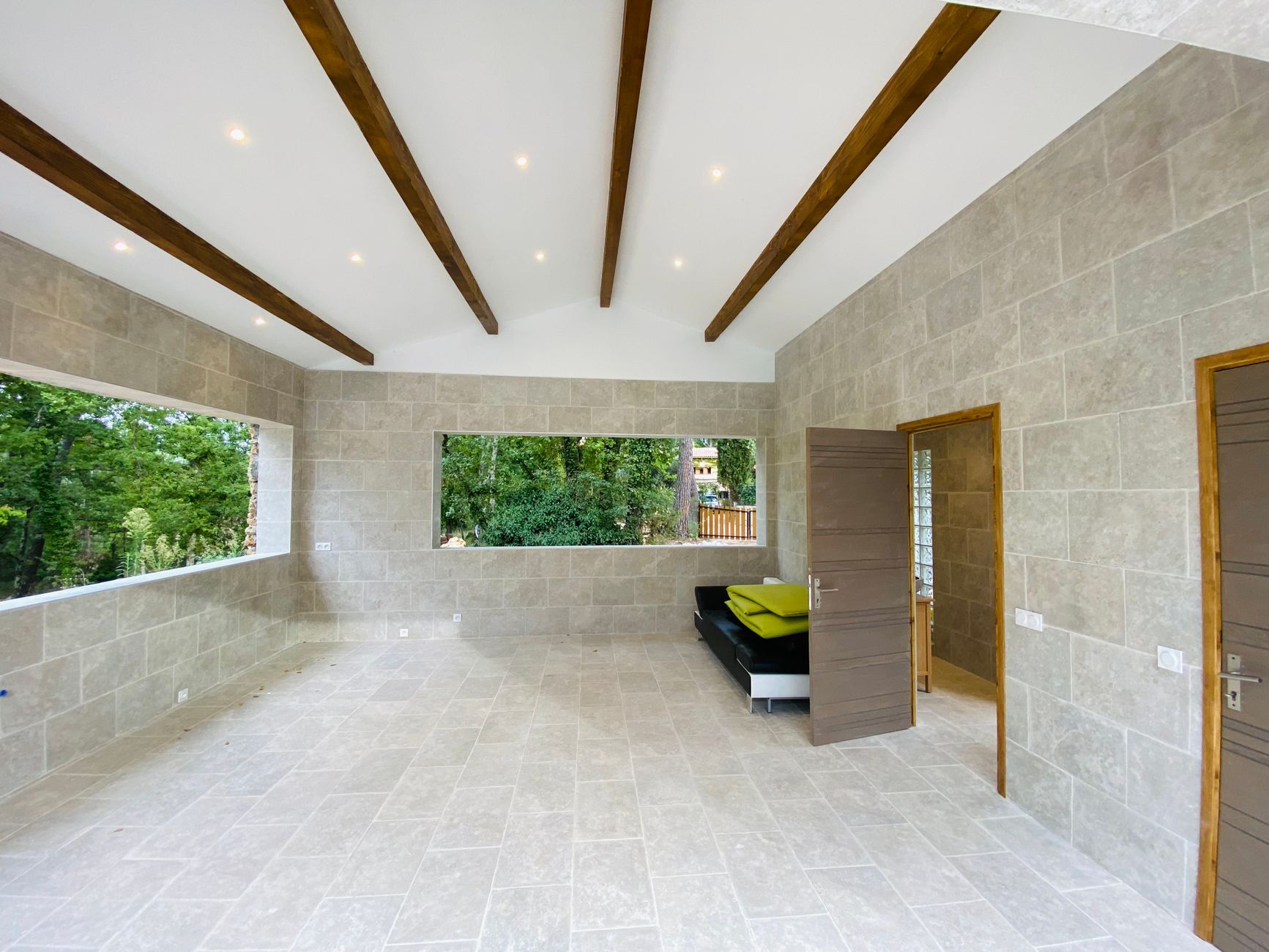
A villa renovation in Dubai can add AED 300,000 to over AED 1,000,000 to your property value — or it can drain six figures into a contractor dispute, a municipal fine, and a half-finished building. The difference comes down to three things: preparation, the right contractor, and understanding how the Dubai renovation process actually works before anyone lifts a tile.
Why Dubai Villas Are Being Renovated Now
Dubai's villa market has grown significantly since 2020, driven by high-net-worth migration, a structural preference for horizontal living, and a wave of buyers purchasing older villa stock in established communities — Emirates Hills, Jumeirah Islands, Arabian Ranches, Mirdif — and renovating before occupancy. Several dynamics are shaping the 2026 renovation market specifically:
- Villas built in the 2005–2014 period are now 12–20 years old, and their original fit-out — Smeg appliances, dated porcelain, GRC feature walls — looks noticeably tired against newer build standards
- Rental yields on renovated villas in popular communities are running 20–35% above comparable unrenovated stock
- Material costs have largely stabilised after 2022–2023 supply chain inflation, though skilled labour costs have risen 15–25% as contractor capacity tightened against sustained demand
- There is a measurable shift toward open-plan living, larger kitchen footprints, and outdoor entertainment space as owner priorities
What has not changed: renovation timelines in Dubai are routinely underestimated, and the consequences of choosing the wrong contractor remain severe. Both points are worth sitting with before any budget discussion starts.
Villa Renovation Costs in Dubai: Room-by-Room (2026)
These ranges reflect mid-to-high quality finish in 2026. Budget specification can be 30–40% lower; luxury specification can be 50–150% higher. Per-square-foot references you will see elsewhere — AED 300–500 for essential updates, AED 600–900 for premium, AED 1,000+ for luxury — are useful for rough budgeting but obscure significant variation by room type and scope. The room-by-room breakdown below is more useful for actual planning.
Kitchen
The kitchen is the highest single-room investment in most Dubai villa renovations, and for good reason — buyers and renters disproportionately weight kitchen quality when making decisions.
- Standard fit: AED 35,000–70,000 — modular cabinets, standard appliances, granite countertop, tiled splashback
- Mid-range: AED 70,000–150,000 — custom joinery, quartz or engineered stone countertop, integrated appliances, island unit
- Luxury: AED 150,000–400,000+ — European custom joinery (Poggenpohl, Boffi, SieMatic), Gaggenau or Miele appliances, natural stone throughout, professional ventilation
Kitchen costs are primarily driven by three decisions: whether cabinets are modular or custom-made; the worktop material; and whether plumbing, drainage, or electrical supply positions are moving, which adds breaking and reinstatement costs.
Master Bathroom
- Standard refresh: AED 15,000–30,000 — new tile, fixtures, vanity, no drain relocation
- Mid-range: AED 30,000–65,000 — full retile with premium large-format porcelain, custom vanity, quality fixtures (Grohe, Hansgrohe), frameless glass or wet room
- Luxury: AED 65,000–180,000+ — natural stone (Calacatta, Statuario, travertine), freestanding bath, designer fixtures (AXOR, THG Paris), underfloor heating, steam shower
Additional Bathrooms
Guest and family bathrooms typically cost 40–60% of master bathroom budgets at equivalent finish levels, reflecting smaller footprints and simpler specifications. In a 5-bedroom villa with 3–4 bathrooms, planning each separately avoids the common mistake of specifying all bathrooms at master-bath level when only one warrants it.
Living and Dining Areas
- Porcelain tile flooring, supply and install: AED 80–200 per sqm (large living area of 100 sqm: AED 8,000–20,000)
- Feature wall in natural stone or large-format porcelain: AED 5,000–20,000
- Gypsum ceiling — coffers, lighting recesses, perimeter detail: AED 8,000–25,000
- Full living and dining renovation including floor, ceiling, walls, and lighting: AED 35,000–90,000
Bedrooms
- Flooring replacement (engineered wood or premium tile): AED 6,000–15,000 per bedroom
- Built-in wardrobe system: AED 6,000–25,000 depending on size and finish
- Full bedroom renovation — floor, ceiling, wardrobe, lighting, paint: AED 20,000–60,000
Outdoor Areas, Pool, and Landscaping
- Garden redesign and planting: AED 20,000–150,000+
- Swimming pool renovation — retile, equipment upgrade, coping, decking: AED 15,000–80,000
- New pool construction: AED 40,000–200,000+ depending on size and finish
- Outdoor kitchen or covered BBQ area: AED 30,000–120,000
- Driveway resurfacing and boundary paving: AED 15,000–50,000
Outdoor areas have grown as a share of total renovation value — particularly with villa owners who bought during the post-2020 market surge and prioritise the outdoor lifestyle the villa format enables.
Total Budget Ranges for a 5-Bedroom Villa
- Cosmetic refresh — paint, flooring, fixtures throughout: AED 80,000–180,000
- Selective renovation — kitchen plus bathrooms plus flooring: AED 200,000–450,000
- Full mid-range renovation: AED 350,000–750,000
- Full luxury renovation: AED 750,000–2,500,000+
These figures assume no major structural modifications. Knocking walls, extending the building footprint, or reconfiguring the staircase adds meaningfully to both cost and the permit timeline below.
When a Renovation Almost Goes Wrong: A Recognisable Story
The pattern is consistent enough to describe without naming names. An owner in Arabian Ranches selects a contractor from a WhatsApp referral — the price is 25% below the other quotes, the showroom visit went well, and the company director was personable. Work starts. Three weeks in, the site manager who was present every day has not been seen for a week. The tiling is progressing but the tile specified in the contract is not the tile being laid. When queried, the contractor explains that the specified tile was "unavailable" and a "similar quality" substitute was used — a substitution that was never discussed or priced. The owner, now four weeks in with significant demolition done, is not in a position to walk away. The final cost is 40% above the original quote. The kitchen takes six weeks longer than promised.
This is not an edge case. It is the modal renovation experience for owners who do not follow a structured process. The steps below are what that process looks like.
The Dubai Villa Renovation Process: Step by Step
Step 1: Scope and Design (Weeks 1–4)
Before approaching any contractor for a quote, you need a defined scope. This means room-by-room decisions on what is being done versus what is retained, material selections (or at minimum a defined material category and price bracket), decisions on structural changes, and fixture and fitting specifications. Without a defined scope, the quotes you receive will be based on different assumptions, making comparison meaningless. An interior designer or design-build firm can guide this process; design fees of AED 10,000–50,000 are typical and are often credited against the project cost.
Step 2: Permits and NOCs (Weeks 2–10)
This step is where project timelines most commonly fall apart for owners who did not plan for it.
- Dubai Municipality permit: Required for structural work — knocking walls, modifying the building envelope, significant MEP reconfiguration. Submission to approval: 4–12 weeks depending on complexity and completeness of submitted drawings.
- Master developer NOC: In gated communities — Emirates Hills, Arabian Ranches, Dubai Hills, Palm Jumeirah, Jumeirah Islands — the master developer requires a No Objection Certificate before any external modification and, depending on community rules, before internal structural work too. Processing time: 2–8 weeks. Some developers have a more stringent review process than others. Do not assume — confirm requirements with the developer directly before submitting.
- DEWA permit: Modifications to the electrical distribution board, new sub-panel installations, or changes to the main electrical supply require DEWA approval. Your contractor must be a DEWA-approved entity to submit this application.
- Cosmetic work: Interior cosmetic renovations — painting, flooring replacement, kitchen cabinet replacement, fixture-for-fixture changes — typically do not require a permit. In gated communities, confirm with the developer before starting even apparently minor work.
Budget a minimum of 6–10 weeks for permit and NOC processes if your project requires them. Starting structural work without permits is a Dubai Municipality violation with fines from AED 50,000 and carries the risk of a mandatory stop-work order and forced reinstatement.
Step 3: Contractor Selection (Weeks 4–8)
This is the single most consequential decision in any renovation project. The things that matter — which most owners do not check:
- Dubai Municipality registration: Verify the contractor's DM building contractor registration number directly on the DM portal. This takes three minutes and filters out a significant proportion of unregistered operators.
- Three references from comparable projects: Not a reference list — actual conversations with previous clients. Ask how the project finished relative to the quoted price, whether the site manager was present consistently, and what snagging was like. Ask to visit a completed project if possible.
- Fixed-price contract with a Bill of Quantities: Refuse any cost-plus or day-rate arrangement. The BOQ should specify all materials by category, grade, and where possible by brand and model. Vague specifications — "porcelain tile, to be selected" — are the mechanism by which material substitution happens.
- Payment schedule tied to milestones: Standard structure: 20–25% deposit, 25–30% at structural completion, 25–30% at MEP rough-in and boarding, 15% at fit-out completion, 5–10% retention held for 3–6 months after handover against defects.
- Named site supervisor: Insist on knowing who will be on site day-to-day. A contractor whose director you meet but whose site manager you never do is a reliable predictor of the pattern described above.
- Delay penalty clause: 10–15% of remaining contract value per month is standard. Without it, schedule slippage has no contractual consequence for the contractor.
- Public liability insurance and worker compensation cover: Request the certificates. Work injuries on your property are a legal exposure without these.
Step 4: Contract Execution (Weeks 8–10)
Key contract terms that protect you:
- Fixed price with BOQ specifying materials, quantities, and — for key items — brand and model
- Client sign-off required before any material procurement against the BOQ
- Written change order process: no scope addition proceeds without a written order, a written price adjustment, and written client approval, all before work starts
- Contractor responsible for all permit applications and fees
- Defects liability period of 12 months minimum from practical completion
- Jurisdiction clause: Dubai Courts or DIFC Courts, client's choice
Step 5: Construction Phase (Weeks 10–34+)
Realistic construction timelines:
- Cosmetic refresh — paint, flooring, fixtures: 4–8 weeks
- Kitchen renovation only: 8–16 weeks
- Bathrooms, 2–4 rooms: 8–14 weeks
- Full villa renovation without structural modifications: 16–28 weeks
- Full villa renovation with structural changes and permits: 24–40 weeks
These are realistic figures, not optimistic ones. Any contractor quoting meaningfully shorter timelines without explanation is either planning to run multiple sites simultaneously with your team or has not thought through the sequencing. Client responsibilities during construction:
- Visit the site weekly at minimum — problems compound if unnoticed for more than a few days
- Photograph all work before it is covered: pipes before screeding, cables before plastering, waterproofing membrane before tiling
- Never pay ahead of milestones — payment leverage is the primary contractual protection available to you
- Every scope change must be documented and priced in writing before work starts
Step 6: Completion and Handover
- Conduct a thorough written snag list with the contractor before releasing any final payment
- Document all snags with photographs and assign a completion deadline in writing
- Retain the final 5–10% of contract value until all snags are satisfactorily resolved
- Obtain as-built drawings for all MEP work — essential for future maintenance and for the next contractor who works on the property
- Obtain all product warranties and maintenance manuals in writing
- Confirm the municipality completion certificate is obtained for any permitted structural work
Villa Renovation Ideas: What Dubai Homeowners Are Choosing in 2026
Open-Plan Living
The removal of the wall between the formal sitting room and dining room — creating a single open-plan family living space — is the most requested structural change in Dubai villa renovations. The result is better natural light, easier supervision of children, and a spatial feel that reads consistently more contemporary. This modification typically requires a structural engineer's assessment and a DM permit if a load-bearing wall is involved.
Kitchen Expansion and Island Units
Expanding the kitchen footprint by absorbing an adjacent utility room or informal dining area, then adding a central island, is the combination that adds the most practical value for families. Kitchen islands function as a breakfast bar, prep station, and social anchor — and photograph well for listing purposes.
Outdoor Living Spaces
Covered outdoor seating areas, outdoor kitchens with built-in grills, and pergola structures over the pool deck have grown substantially as a share of villa renovation spend. Dubai's climate genuinely permits outdoor living for 7–8 months of the year, and owners who have not invested in outdoor space consistently cite it as the renovation they wish they had done first.
Bathroom Spa Transformations
Converting the master bathroom to a wet room format — frameless, doorless, continuous stone-look porcelain on floor and walls, linear drain — and adding a freestanding bath is the luxury bathroom direction that commands the strongest positive response from buyers. See the bathroom renovation Dubai guide for the full specification.
Smart Home and Lighting Integration
A full renovation is the right time to install or upgrade a smart lighting and climate control system — Lutron, KNX, or Control4 are the standard platforms used in Dubai villa renovations. Retrofit is possible but significantly more disruptive and expensive than installing during a gut renovation when walls are open.
Energy Efficiency Upgrades
DEWA's solar feed-in tariff and the sustained cost of electricity in Dubai have made solar panel installation commercially interesting for villa owners, particularly for properties with large west- or south-facing roof areas. Insulation upgrades, double-glazed window replacement, and smart AC zoning are also frequently incorporated into full villa renovation scopes.
How Renovation Affects Villa Value in Dubai
The financial case for renovation is generally strong in Dubai's current market, provided the specification is appropriate for the community and the property's value bracket. Key benchmarks:
- Well-executed kitchen renovations in mid-to-high value villa communities typically return 100–150% of cost in added resale value
- Master bathroom renovations at AED 50,000–100,000 tend to return the full cost in most villa communities
- Full villa renovations in the AED 350,000–750,000 range typically add AED 400,000–1,000,000+ to property value in established communities, though this varies significantly by location and condition of the unrenovated property
- Over-specification is a real risk: a AED 500,000 kitchen in a AED 3M villa may not achieve full return in the resale market for that price bracket
For investment properties, the calculation shifts to rental yield. A renovated 5-bedroom villa in Arabian Ranches commanding AED 380,000 per year versus AED 290,000 unrenovated repays a AED 400,000 renovation in approximately four years on the rental differential alone — before any capital appreciation.
The 5 Most Costly Renovation Mistakes in Dubai Villas
1. No Fixed-Price Contract with a BOQ
Cost-plus and day-rate contracts are the primary source of renovation disputes in Dubai. Without a fixed price anchored to a Bill of Quantities specifying materials and quantities, there is no contractual basis for challenging cost overruns. This is not a technicality — it is the single structural protection you have. Always insist on it.
2. Starting Structural Work Without Permits
DM fines for unpermitted structural work begin at AED 50,000 and can require mandatory demolition and reinstatement of the modified structure. In gated communities, the master developer can issue immediate stop-work orders that halt the entire project. Permits take time — but they also protect your investment, your relationship with the developer, and your ability to sell the property without a permit compliance issue in the future.
3. Accepting the Lowest Quote Without Investigation
A quote 25–35% below the market median almost always indicates one of three things: materials of a lower grade than specified are being planned; inadequate labour allowances leading to pressure to cut corners mid-project; or the contractor intends to recover margin through change orders once demolition is complete and you are committed. Investigate any significant outlier before accepting it — the right question is not why the quote is cheap, but what has been excluded or under-specified.
4. Vague Material Specifications
A contract that says "porcelain tile, 600×600, to be selected" allows the contractor to install the cheapest product available within that format. Specify everything that matters: tile brand or collection and price bracket, fixture brands and models, joinery material and board grade, appliance models. What cannot be fully specified should have a clearly defined price allowance — agreed in writing — that forms a contractual benchmark.
5. No Defects Liability Period
Tile movement, grout cracking, door adjustment, paint yellowing, and plumbing drips typically manifest 3–6 months after completion when the building has settled and been through temperature cycling. Without a 12-month defects liability period in the contract, you have no recourse once practical completion is signed off. Any contractor unwilling to offer this is telling you something important about their confidence in their own workmanship.
Choosing the Right Villa Renovation Company in Dubai
The contractor market in Dubai ranges from excellent to genuinely dangerous. Price is not a reliable signal of quality in either direction — some of the city's most expensive contractors deliver mediocre results, and some of the best are not the most expensive. What actually differentiates a quality operator:
- They have a named, experienced site supervisor who is present daily — not a director who appears for the first site meeting and is not seen again
- They produce a proper Bill of Quantities as a matter of course, not reluctantly on request
- They are willing to provide three direct references from comparable projects completed in the last 18 months
- They ask detailed questions about your scope before quoting — a contractor who can quote accurately within 24 hours without asking about tile specification, ceiling heights, or appliance requirements has not actually priced the job
- They hold valid DM registration, public liability insurance, and worker compensation cover and provide the documentation without hesitation
- They offer a fixed-price contract with a defects liability period as standard
A glossy showroom and a polished presentation do not guarantee any of the above. Verify everything independently.
Frequently Asked Questions
How much does it cost to renovate a villa in Dubai?
A cosmetic refresh — paint, flooring, fixtures — for a 5-bedroom villa costs AED 80,000–180,000. A selective renovation covering the kitchen plus bathrooms costs AED 200,000–450,000. A full mid-range renovation runs AED 350,000–750,000. A full luxury renovation can reach AED 750,000–2,500,000 or more. Per-square-foot rates are AED 300–500 for basic, AED 600–900 for premium, and AED 1,000+ for luxury specification.
Do I need a permit to renovate a villa in Dubai?
It depends on the scope. Cosmetic work — painting, flooring, fixture replacement — typically does not require a permit. Structural changes (moving walls, extensions), significant MEP modifications, or any work on the building envelope require a Dubai Municipality permit. Properties in gated communities also require a master developer NOC for external modifications and often for internal structural work. Always confirm before starting — fines for unpermitted structural work start at AED 50,000.
How long does a full villa renovation take in Dubai?
A cosmetic refresh takes 4–8 weeks. A full renovation of a 5-bedroom villa covering kitchen, bathrooms, flooring, and ceilings typically takes 20–30 weeks for construction alone, plus 6–10 weeks for permits if structural work is involved. Total project duration from initial design to handover: 9–14 months for a full renovation. Any contractor promising significantly shorter timelines should be asked to explain the scheduling in detail.
Can I live in my villa during renovation?
For partial renovations — one bathroom at a time, one floor at a time — occupation is possible with careful sequencing and a contractor you can trust to maintain a workable site. For a full villa renovation, occupation during active construction is generally impractical and slows progress significantly. Factor in temporary accommodation costs — AED 8,000–25,000 per month for a comparable villa — when budgeting the total project cost.
How do I verify a contractor is properly registered in Dubai?
Ask for the contractor's Dubai Municipality building contractor registration number and verify it directly on the DM portal. Also request the public liability insurance certificate and worker compensation cover — and verify they are current. References from recently completed comparable projects are essential; ask to speak directly with previous clients, not just receive a contact list. Ask specifically about how the project finished relative to the quoted price.
What contingency budget should I set aside for a villa renovation?
Ten to 15% of the project value is standard for a property in reasonable condition. For older buildings — particularly those with suspected water damage, ageing wiring, or corroded pipework — 20% is more appropriate. Hold this in your own reserve: do not disclose it to the contractor and do not release it as additional deposit. Contingency is specifically for conditions discovered once demolition starts, not for change of mind on specification.
Is villa renovation a good financial investment in Dubai?
The data supports it when the specification is appropriate for the property and community. Well-executed kitchen and bathroom renovations typically return 100–150% of cost in added resale value in mid-to-high value Dubai villa communities. Full villa renovations in the AED 350,000–750,000 range typically add AED 400,000–1,000,000+ to property value in established communities. For rental properties, the yield differential between renovated and unrenovated stock in sought-after communities typically repays the renovation cost within 4–6 years.
Can True Guard manage the entire renovation project?
Yes. True Guard provides full turnkey renovation project management — from design coordination and permit applications through material procurement, contractor supervision, and final handover. This is particularly valuable for owners not resident in Dubai, or those who want professional oversight without managing the process and the contractor relationship day-to-day.